Our Projects

Take a look at some of our projects. If you work with or have young people in your life, feel free to download and use the resources with them. Don’t hesitate to share with others. We just ask that you credit Room 228. And none of our projects are for resale. Read away!

Project Thumbnail

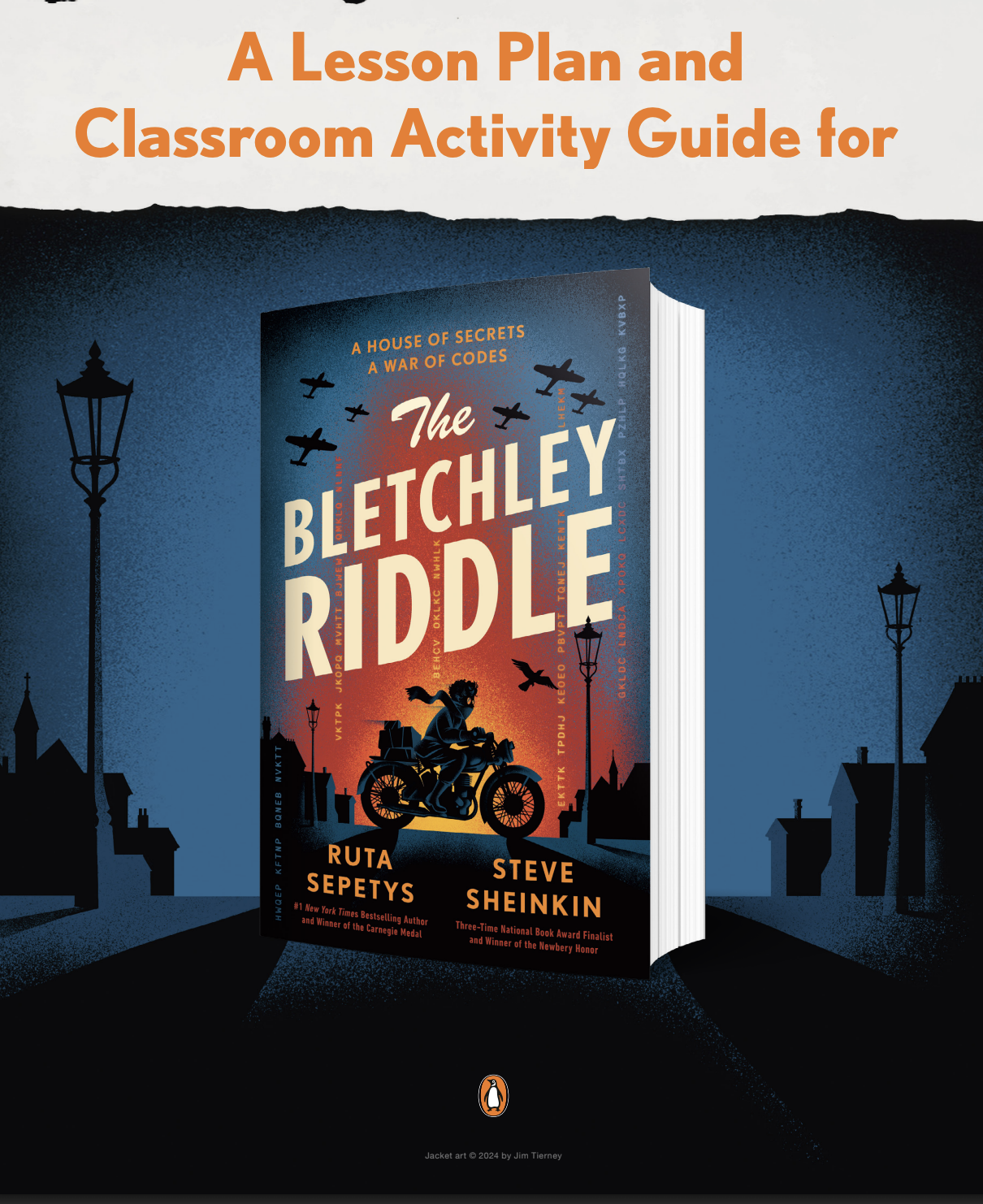
Mini Unit for Ruta Sepetys and Steve Sheinkin’s The Bletchley Riddle

Clues, codes, and connections! New York Times best selling authors Ruta Sepetys and Steve Sheinkin’s The Bletchley Riddle is a wild ride that incorporates mystery and history in a way that speaks to young people. The educational materials can be integrated seamlessly into teachers’ existing units. The mini-unit encompasses four lesson plans—two geared toward 5th–6th grades and two for 7th–8th grades. But each lesson plan can easily be adapted in language, vocabulary, number/complexity of tasks, and objectives to match your grade level. The lessons are academic and inclusive and are constructed so students can read, write, draw, listen, move, speak, and of course, decode! Worksheets have students playing investigators and code breakers to help solve the mystery surrounding the disappearance of Jakob and Lizzie’s mother. The Bletchley Riddle is teeming with cross-disciplinary topics, themes, and skill-building. Like we said: clues, codes, and connections galore!

Download

Project Thumbnail
Project Thumbnail

Educator Guide for Sara Weiss’ The Totally Awesome World of Caitlin Clark

Sara Weiss’ middle grade biography The Totally Awesome World of Caitlin Clark dives deep into Clark’s basketball journey and the history of the WNBA with high-action photographs and historical and factual blurbs. Weis doesn’t shy away from sometimes overlooked topics, including the challenges in women’s sports and the role race plays in sports, the media, and society. Whether you’re a basketball fanatic or you’ve never set foot on a court, this book and educator guide offer something for all. Readers will be celebrating hard work and the magic of a childhood dream! The educator guide has young people exploring elements of nonfiction texts, setting goals, and connecting the exciting world of basketball to the wonderful world of math.

Download

Project Thumbnail
Project Thumbnail

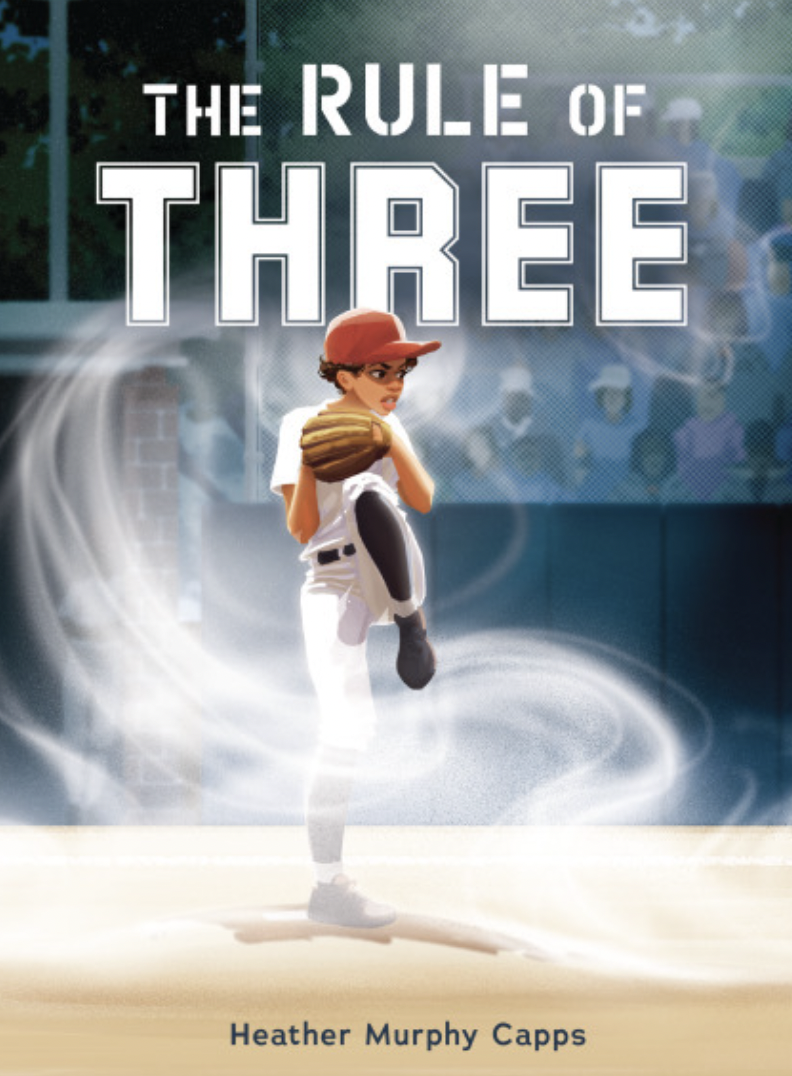
Educator Guide for Heather Murphy Capps’ The Rule of Three

Wyatt Cash has a three-part plan. Play travel ball in middle school. Letter on the high school varsity team. Play college ball at a Division One school. Step One: Make it through tryouts and earn a spot on the Tornadoes, where he faces intentional and unintentional snubs from peers and adults alike. There’s only one problem: Wyatt inherited a genetic trait from his dad that makes keeping his cool difficult. The more he learns about the past, the more Wyatt begins to question the rules he’s always followed to fit in. Will Wyatt be able to keep his stone cold facade and his personal dreams from going up in smoke? This educator’s guide creates opportunities for students to learn more about the historical events and injustices highlighted in The Rule of Three. The discussion questions and activities allow for text-to-self and text-to-real-world connections, making inferences, and practicing critical thinking skills.

Download

Project Thumbnail
Project Thumbnail

Educator Guide for Kimberly Brubaker Bradley’s Middle Grade Novel The Night War

As seen in this middle grade novel, set at the border between freedom and fear in World War II France, teachers and students faced difficult choices in 1942 as Germany advanced their occupation of Europe through France; today, students and teachers face their own choices. This novel and this guide bring many important issues to the forefront and will help to facilitate essential discussions of themes, academic exploration, analysis of how history is constantly evolving, and text-to-self connections that encourage deeper understanding of characters, literature, students’ worlds, and themselves.

Download

Project Thumbnail
Project Thumbnail

Educator Guide for My Selma by Willie Mae Brown

In her memoir, Brown immerses her readers in the fear and uncertainties that the southern Black community experienced regularly in Selma, Alabama in the mid-1960s. Despite these many abuses, her memories of Selma are beautiful and filled with joy, love, and admiration for the people, for the locales she frequented, and for her family and home. In this educator guide, students will explore contextual vocabulary, the power of primary sources, and unique writing choices. Brown’s story teaches young readers today of the past, with the hope of changing the world of the future.


Download

Project Thumbnail